Adaptive Identities, How Digital Actors Evolve under Pressure
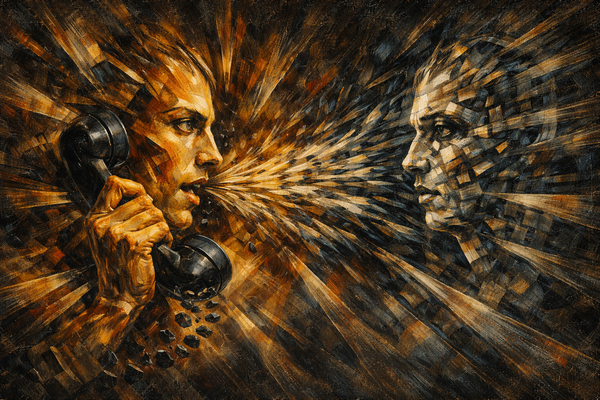
Digital systems were designed around stable identities: users authenticate, services execute predefined roles, boundaries hold. Under sustained pressure, that assumption erodes. Identity becomes fluid, strategic, and contingent in ways that most security models don't account for.

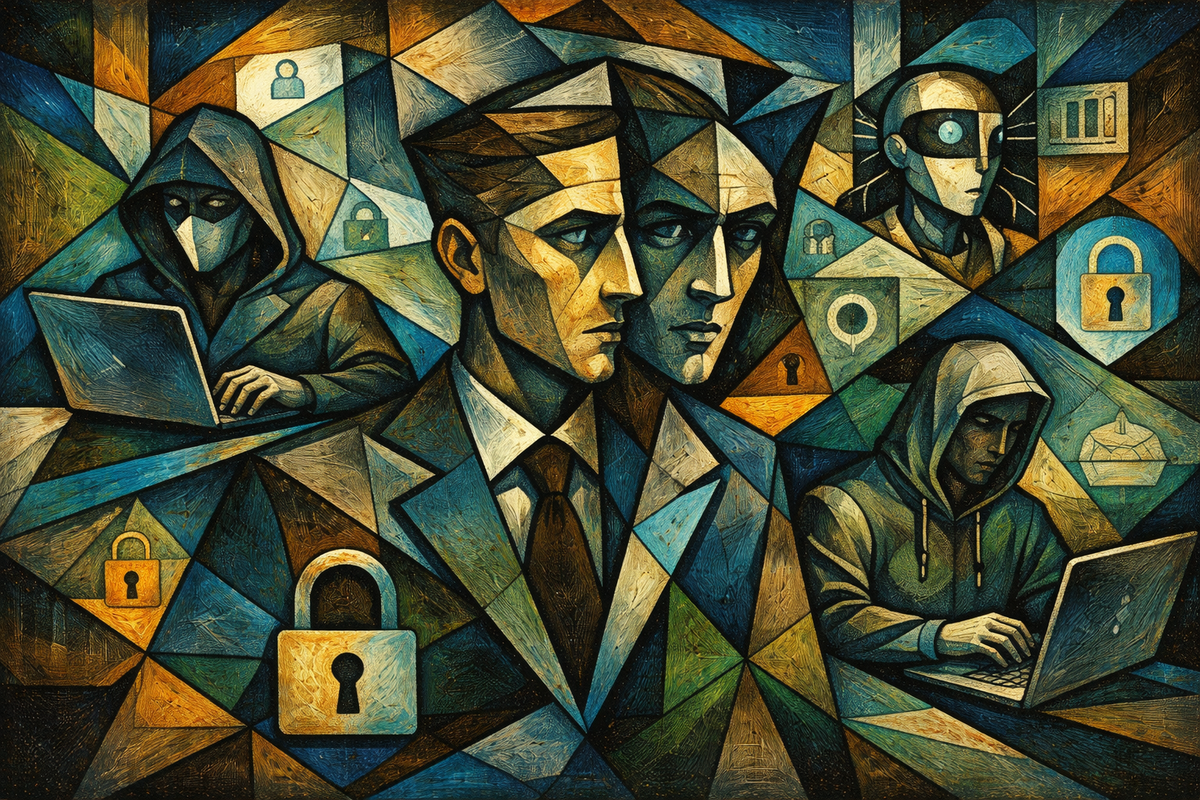
Put a digital identity under enough pressure and it stops being one thing. It fragments, adapts, recombines. The person or system that emerges on the other side is not the one that went in.
This essay examines adaptive identity as a structural phenomenon rather than a security anomaly. It argues that digital actors, whether human users, services, or autonomous processes, do not merely occupy identities but negotiate them dynamically. Under sustained pressure, identity becomes fluid, strategic, and contingent. Understanding this evolution is essential for interpreting behaviour, assigning responsibility, and designing systems that remain intelligible when conditions deteriorate.
Identity as a System Property
Identity is often treated as an attribute, something assigned, verified, and enforced. In practice, identity functions as a system level property that emerges from interaction. Credentials, roles, and claims are only fragments. The operative identity of an actor is defined by what it can access, what it can influence, and how it is perceived by other components of the system.
In distributed and highly automated environments, these properties shift constantly. Permissions are granted temporarily. Tokens expire and refresh. Contextual signals alter trust scores. Identity becomes less a fixed label and more a moving boundary that reflects current conditions.
Pressure accelerates this process. When systems operate under threat, scarcity, or scrutiny, actors adjust their behaviour to maintain access and continuity. Identity evolves not because it was designed to, but because rigidity becomes unsustainable.
Pressure as a Catalyst for Adaptation
Pressure in digital systems takes many forms. It may originate from external attack, internal audit, regulatory oversight, performance constraints, or social exposure. Regardless of origin, pressure alters incentives. Actors respond by optimising for survival, efficiency, or invisibility.
Human users adopt workarounds when controls impede productivity. Service accounts accumulate privileges to reduce operational friction. Automated agents replicate, fragment, or mask themselves to avoid disruption. Over time, these adaptations become normalised, even when they diverge significantly from original intent.
This process mirrors biological adaptation. Under stable conditions, identity remains relatively fixed. Under stress, variation increases. Some adaptations fail. Others persist and reshape the system. Identity becomes an evolutionary surface on which pressure leaves lasting marks.
The Multiplication of Selves
One consequence of adaptive identity is fragmentation. A single actor may operate through multiple identities, each optimised for a specific context. A user may authenticate differently depending on location. A service may present distinct roles to different subsystems. An organisation may maintain parallel identities across platforms, jurisdictions, or narratives.
This multiplication is rarely visible from any single vantage point. Each subsystem observes only the identity relevant to its context. Coherence exists only as an assumption, not as a guaranteed property.
Under pressure, fragmentation increases. Actors compartmentalise to reduce risk, limit exposure, or bypass constraints. While this can improve resilience locally, it complicates global understanding. Behaviour that appears inconsistent may in fact be adaptive.
Adaptive Identity and Attribution
Attribution relies on the assumption that actions can be traced to stable actors. Adaptive identity undermines this assumption. When identities shift, merge, or dissolve, responsibility becomes ambiguous.
In security incidents, this ambiguity complicates response. Was an action malicious or defensive. Was it authorised or emergent. Was it the result of a single decision or a cascade of adaptive responses.
The challenge is not merely technical. It is interpretive. Systems must distinguish between adaptive behaviour that preserves integrity and adaptive behaviour that erodes it. This distinction cannot be automated fully. It requires contextual judgment and institutional clarity about acceptable adaptation.
Surveillance and Identity Feedback Loops
Surveillance exerts its own pressure. Systems that monitor behaviour influence how actors present themselves. When observation increases, adaptation follows.
Users alter behaviour to avoid scrutiny. Services randomise patterns to avoid detection. Organisations restructure workflows to appear compliant rather than to be resilient. Identity becomes performative, shaped by what is measured rather than what is necessary.
This creates feedback loops. Surveillance encourages adaptation. Adaptation degrades signal. Degraded signal prompts increased surveillance. Over time, identity drifts away from functional truth toward strategic representation.
The risk is not concealment alone. It is misinterpretation. Systems begin to optimise for appearances, losing sight of underlying behaviour.
Trust under Adaptive Conditions
Trust frameworks often assume identity stability. Certificates bind keys. Roles bind permissions. Policies bind behaviour. When identities adapt rapidly, trust becomes provisional.
In high pressure environments, trust must be continuously renegotiated. Static trust models fail because they cannot keep pace with adaptive change. Excessively dynamic trust models fail because they erode predictability.
The balance lies in acknowledging adaptation without normalising opacity. Systems must tolerate identity evolution while preserving auditability, traceability, and moral accountability. This requires designing trust as a process rather than a state.
Human and Machine Convergence
Adaptive identity blurs the distinction between human and machine actors. Both respond to pressure by adjusting behaviour. Both exploit affordances. Both learn from constraints.
Automation accelerates adaptation. Machine actors can modify behaviour at speeds humans cannot match. Humans, in turn, adapt by delegating, abstracting, and obscuring responsibility through tooling.
This convergence complicates governance. Policies written for human actors fail when applied to adaptive systems. Controls designed for machines fail when humans exploit them creatively. Identity becomes a shared problem space rather than a category.
Designing for Adaptive Identity
Systems that assume static identity will fracture under pressure. Designing for adaptive identity requires acknowledging fluidity without surrendering control.
Key principles include:
- separating identity from authority to limit escalation
- logging identity transitions rather than only states
- preserving historical continuity alongside current context
- designing controls that degrade gracefully under adaptation
- treating identity drift as a signal rather than a failure
These principles recognise that adaptation is inevitable. The goal is not to prevent it, but to render it legible.
Ethics of Identity Evolution
Adaptive identity raises ethical questions. When does adaptation become deception. When does resilience become evasion. When does optimisation undermine accountability.
These questions cannot be resolved purely through policy. They require normative judgment grounded in institutional values. Systems reflect the ethics of their designers and operators. If adaptation is rewarded without constraint, integrity erodes. If adaptation is punished indiscriminately, resilience collapses.
Ethical identity evolution requires transparency about intent and consequence. It requires distinguishing between adaptation that preserves system purpose and adaptation that subverts it.
Conclusion
Digital actors evolve under pressure because pressure exposes the limits of static design. Identity adapts not as an exception, but as a response to constraint. In modern systems, understanding identity means understanding how it changes.
The challenge ahead is not to freeze identity, but to design systems that remain intelligible as identities shift. Accountability, trust, and integrity depend on our ability to interpret adaptation rather than deny it.
Adaptive identity is not a flaw. It is a signal. The task is learning how to read it.
Sources
Michel Foucault. Discipline and Punish. Vintage Books. https://www.penguinrandomhouse.com
Shoshana Zuboff. The Age of Surveillance Capitalism. PublicAffairs. https://www.publicaffairsbooks.com
NIST. Digital Identity Guidelines. National Institute of Standards and Technology. https://pages.nist.gov
Bruce Schneier. Liars and Outliers. Wiley. https://www.wiley.com
MIT CSAIL. Identity and Access in Distributed Systems. https://csail.mit.edu
Oxford Internet Institute. Digital Identity and Power. https://www.oii.ox.ac.uk