
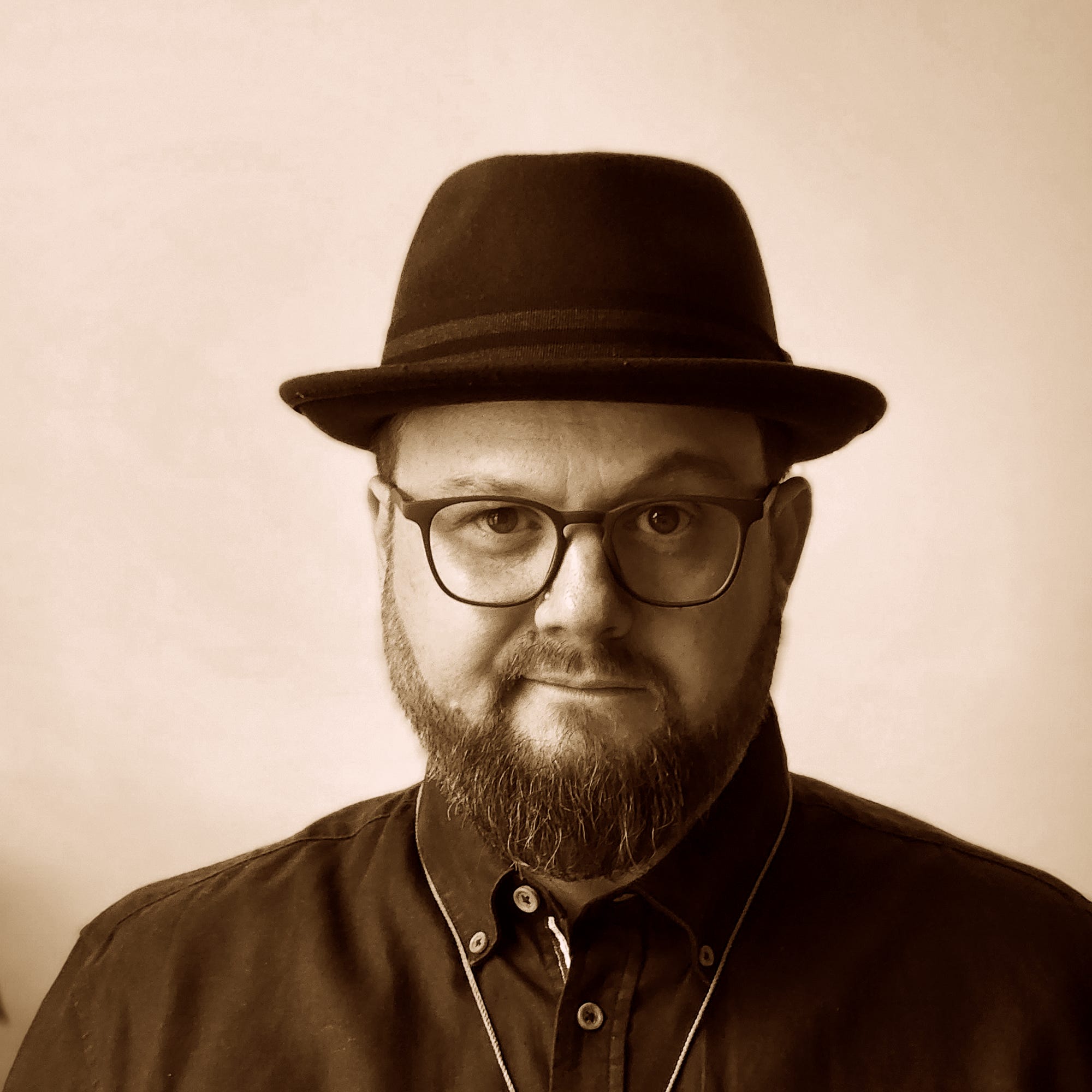
Marco Brondani is a CISO and CTO with nearly three decades inside complex systems, writing on cybersecurity governance, AI risk, and platform strategy.
Nearly three decades in technology and security leadership, as a CISO, as a CTO, as the person responsible for whether complex systems hold together or quietly fall apart. I’ve built platforms, secured them, watched them scale, and dealt with what happens when architectural choices made years earlier finally surface as consequences nobody planned for.
That work has crossed industries and architectures: retail and hospitality, financial services, traditional distributed systems, blockchain infrastructure, enterprise platforms. Along the way I’ve coauthored patents as both inventor and co-inventor, not because patents are the point, but because the problems I was solving didn’t have existing answers.
Somewhere in that breadth, a conviction settled in. The most important questions in technology are almost never technical. They’re about power, accountability, and what happens to both when systems become too complex for any single person to fully understand.
This site is where I work through those questions.
The topics move between AI adoption (the gap between what these systems can produce and what organizations are equipped to govern), cybersecurity as an economic problem rather than a purely engineering one, and the structural forces, from technical debt to misaligned incentives, that make fragile systems rational in the short term and catastrophic over time.
The perspective comes from inside the room where these decisions get made. Not from research abstracts or trend reports; from years of sitting with the tension between what should be built and what actually gets built, between the architecture on the whiteboard and the system running in production at two in the morning.
I’m not sure any of it adds up to a unified theory. I’m not trying to build one. I’m interested in what holds, what breaks, and why the difference matters.
Alongside the technology work, I write literary nonfiction. The two pursuits look separate but they come from the same place: an attention to how systems shape the people inside them, and how language either reveals or conceals what’s actually happening. The instinct that makes me skeptical of opaque architectures is the same one that makes me skeptical of opaque prose.
Everything here is written slowly and on purpose. No content calendar, no optimization, no algorithmic packaging. Each essay earns whatever time it asks of you, or it has no business existing. The reader’s attention is not a metric to be captured. It’s a responsibility.
In a landscape dominated by urgency and volume, I choose depth.
About the author
Marco Brondani is a CISO and CTO with nearly three decades in technology and security leadership, across retail and hospitality, financial services, distributed systems, blockchain infrastructure, and enterprise platforms. He is a named inventor and co-inventor on multiple patents, and writes on cybersecurity governance, AI risk, and platform strategy for boards, executives, and founders. He is also the author of The Split Problem.
Connect: LinkedIn · The Split Problem · marcobrondani.com
If that resonates, subscribe. One essay per week, sometimes more when a topic demands it.
Stay up-to-date
Never miss an update—every new post is sent directly to your email inbox. For a spam-free, ad-free reading experience, plus audio and community features, get the Substack app.
To learn more about the tech platform that powers this publication, visit Substack.com.
